Friday, February 25, 2011

Week 26: Michelangelo

Diversity is any kind of variety that makes our world a better place. 

Michelangelo is considered to be among the greatest artists ever produced by Western Civilization.  His most famous work is his portrayal of 50 scenes and figures which he painted across the enormous ceiling surface of the Sistine Chapel in Rome.  He was born this week, in Tuscany, Italy, in 1475. 

Michelangelo lived at a time when apprenticeships were a common form of education and training.  Michelangelo himself began his series of apprenticeships at the age of 13.  At their most basic level, apprenticeships involve learning a skill from an expert. 

In our modern world, apprenticeships have been replaced by schooling.  However, it is still important to honor and appreciate the kind of learning that is transmitted directly from one person to another.  Re-building an engine, knitting blankets, raising horses.  When you take the time to learn specialized skills like these from someone, you are tapping into one of the oldest forms of learning—just like Michelangelo centuries ago. 

Remember, you don’t have to travel as far as Tuscany, Italy to find diversity.  There are hundreds of opportunities to celebrate diversity right here at your own school.  Find one today! 

Tuesday, February 22, 2011

Week 25: The Internment of Japanese-Americans

Diversity is any kind of variety that makes our world a better place.  Today we shine a spotlight on a tremendous act of courage during a time of national hysteria. 

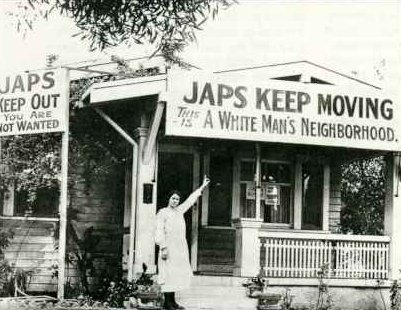
This week in 1942, during World War II, President Roosevelt signed a Presidential order that resulted in every Japanese-American citizen living along the West Coast to be forced out of their homes without cause, and relocated into internment camps located in various isolated locations. 

As part of the process a Congressional committee traveled to Los Angeles, San Francisco, Portland, and Seattle to collect the comments of Americans towards their Japanese-American neighbors.  The public mood everywhere was overwhelmingly anti-Japanese.  But the hearings in Portland stood out because it was the only city without any organized protest against the President's actions.  In fact, only one person stood up to publicly support the Japanese-Americans in front of the committee.  Her name was Azalia Peet from the city of Gresham.  Far beyond appreciating diversity, Ms. Peet risked her life to state the truth when no one wanted to hear it. 

Remember, you don't have to travel as far as Gresham, Oregon to find diversity.  There are hundreds of opportunities to celebrate diversity right here at your own school.  Find one today! 

Saturday, February 12, 2011

Week 24: The Sahara Desert

Diversity is any kind of variety that makes our world a better place.  

There is no recorded memory of snow ever falling in the Sahara Desert—except for on one occasion, this week in 1979.  The snow storm occurred in Southern Algeria although the snow disappeared within hours. 

Believe it or not, there was a time during the Stone Age when the Sahara was wet, green, and habitable.  Scientists know this because they have uncovered a massive burial ground with the skeletal remains of humans and hundreds of animals including antelopes, giraffes, hippos, turtles, and clams.  The Earth is diverse at any given time, but we can learn from the Sahara Desert that it is also diverse across time as well—things can and will change. 

Remember that this is also true for people as well.  When you appreciate diversity among the people around you, you are also appreciating the fact that people can and do change. 

Remember, you don’t have to travel as far as the Sahara Desert to find diversity.  There are hundreds of opportunities to celebrate diversity right here at your own school.  Find one today!

Saturday, February 5, 2011

Week 23: The Amazon River Basin

Diversity is any kind of variety that makes our world a better place.  

We all know that water flows from rivers into the oceans, right?  Well nature always seems to have a way of surprising us.  In a few places around the world, there are times in the year when water flows backwards from the ocean up a river.  The phenomenon is called a tidal bore, and one of the most spectacular tidal bores is occurring right now in Brazil, at the mouth of the Amazon river.  Waves reaching up to 12 feet high have been known to flow as far as 7 miles upstream.  

The Amazon River is amazing for many other reasons.  It contains more water than the next ten largest rivers combined.  And ten percent of all known species in the world live in the Amazon Basin Rain Forest.  An ecosystem that enormous has a huge impact on the environmental health of the world.  It’s no wonder that there are so many organizations large and small who are trying to preserve the diversity of life in the Amazon rain forests.  

Remember, you don’t have to travel as far as the Amazon River to find diversity.  There are hundreds of opportunities to celebrate diversity right here at your own school.  Find one today! 

Sunday, January 30, 2011

Week 22: History of Fractions

Diversity is any kind of variety that makes our world a better place.  

This week we can talk about a milestone that is truly worth celebrating—we are half-way through the school year.  Now what do you think about that?  And by “that” I mean the fraction one-half.  

We often think of cavemen counting rocks or sticks, but those are whole numbers.  So when did fractions first appear in mankind’s history?  The fraction that is familiar to us today with a numerator, horizontal bar, and denominator was first developed by an Arab mathematician from North Africa during the 12th century.  But Egyptians from as early as 1800 B.C. had their own notation for fractions that was based in hieroglyphic pictures.  

Fractions can be tedious, what with common denominators and reducing and all.  But would you honestly prefer a world without fractions?  After all, if we didn’t understand fractions, we’d be thinking that there was still a whole year of school left.  

Remember, you don’t have to travel as far as North Africa and Egypt to find diversity.  There are hundreds of opportunities to celebrate diversity right here at your own school.  Find one today!

Saturday, January 22, 2011

Week 21: Space Shuttle Challenger Crew

Diversity is any kind of variety that makes our world a better place.  

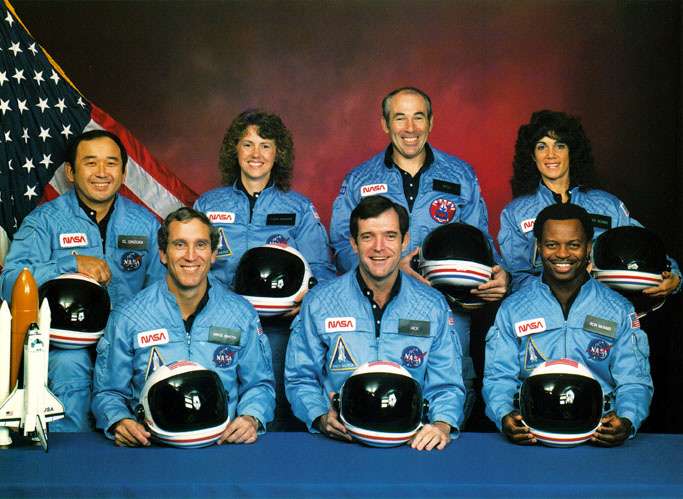
Today we are commemorating the spirit of the seven Americans whose lives were lost 25 years ago this week when the Space Shuttle Challenger disintegrated shortly after take off.  

Throughout NASA’s rich Space Shuttle history, the astronauts who earned the honor of flying in space have been a cross-section of American diversity.  Sally Ride was the first American women in space, and Guy Bluford was the first African-American, just to name two examples.  The Challenger crew was also a collection of men and women from many backgrounds, including of course Christa McAuliffe, who was the first teacher in space.  

In President Reagan’s eulogy for the Challenger Seven, he said the following:   
We think back to the pioneers of an earlier century, and the sturdy souls who took their families and the belongings and set out into the frontier of the American West. Often, they met with terrible hardship. Along the Oregon Trail you can still see the grave markers of those who fell on the way. But grief only steeled them to the journey ahead.  Today, the frontier is space and the boundaries of human knowledge. Sometimes, when we reach for the stars, we fall short. But we must pick ourselves up again and press on despite the pain. Our nation is indeed fortunate that we can still draw on immense reservoirs of courage, character and fortitude - that we are still blessed with heroes like those of the space shuttle Challenger.
Remember, you don’t have to travel as far as the Kennedy Space Center in Florida to find diversity.  There are hundreds of opportunities to celebrate diversity right here at your own school.  Find one today!  

Monday, January 17, 2011

Week 20: Organic Foods

Diversity is any kind of variety that makes our world a better place. 

Here’s the funny thing about organic foods.  We think of it as something new and trendy.  And yet, until farming and food processing became so industrialized, people ate nothing but organic foods throughout the history of mankind!  This week we are celebrating the birthdate of Walter James of Kent, England who first coined the phrase “organic farming” in a book he wrote in 1940. 

Today, in our grocery stores and restaurants we are bombarded with so many choices.  If you agree that what you put into your body is important, then it will be essential for you to develop solid critical thinking skills.  How different is brand A from brand B?  How much healthier are “healthy foods,” and how much extra cost are you willing to pay for it?  Has food processing made your life better or worse?  There are no easy answers to any of these questions—you will need to find your own way of making the diversity of food choices beneficial to you. 

Remember, you don’t have to travel as far as Kent, England to find diversity.  There are hundreds of opportunities to celebrate diversity right here at your own school.  Find one today! 

Sunday, January 9, 2011

Week 19: Marie Curie

January 10, 2010:  Diversity is any kind of variety that makes our world a better place.

Last year, the magazine New Science conducted a poll to determine who was the most inspirational woman in science. The results weren’t even close—the winner was Marie Curie, by a large margin. Actually, Curie has been an inspiration to all scientists, both male and female.

During this week in 1902, Curie isolated the radioactive element called Radium. She received a Nobel prize in physics for this work, becoming the first woman to receive the award. Then eight years later, she won a second Nobel prize—for her work in a different field, chemistry.

But even after winning these awards, it’s interesting to note that the prestigious French Academy of Sciences refused to elect her as a member because she was a woman. There are barriers for women in science still, and the world needs more Marie Curie’s. Girls, are you up to the challenge?

Remember, you don’t have to travel as far as Paris, France or Warsaw, Poland to find diversity. There are hundreds of opportunities to celebrate diversity right here at your own school. Find one today!

Sunday, January 2, 2011

Week 18: Individuals with Disabilities

January 3, 2011: Diversity is any kind of variety that makes our world a better place.

In our society we do not use words that refer to people in a hateful or derogatory manner. Do you know anyone in your community with a developmental disability such as Down’s Syndrome or Cerebral Palsy, for example? Very few of you would call them a hateful name. But when someone uses the term “retarded” in a joking way, it is hurtful, even if it’s not meant to be. In our school, let’s add the word “retarded” to the list of words that are inappropriate to joke about.

This week we honor the abilities of all students by celebrating the anniversary of the founding of “Best Buddies.” Best Buddies is an organization that was started by one college student in Washington DC in 1989. His idea was to create one-to-one opportunities for disabled individuals to socialize or work with non-disabled volunteers. Today, Best Buddies programs exist in high schools and colleges in all 50 states.

Remember, you don’t have to travel as far as Washington, DC to find diversity. There are hundreds of opportunities to celebrate diversity right here at your own school. Find one today!

Monday, December 27, 2010

Week 17: Kwanzaa

December 27, 2010:  Diversity is any kind of variety that makes our world a better place.

There are seven principles of Kwanzaa. Which one is your favorite? Do you strive for unity in your family and community? Do you define who you are, instead of letting others do it for you? Are you generous in helping others with their problems? Do you support your neighborhood businesses? Do you build upon your family’s traditions? Do you beautify your community? Do you believe in your own inner goodness and the goodness of your parents, teachers, and leaders?

Kwanzaa is a week-long holiday that some African-Americans celebrate. But whether you are African-American or not, let’s all take time to reflect upon who we are and to reaffirm our commitment to building a stronger community.

Remember, you don’t have to travel as far as a neighborhood cultural center to find diversity. There are hundreds of opportunities to celebrate diversity right here at your own school. Find one today!

Friday, December 17, 2010

Week 16: Winter Solstice

December 20, 2010: Diversity is any kind of variety that makes our world a better place.

The diversity of our four seasons is a result of the 23 ½ degree tilt in the earth’s axis as it orbits around the sun. We experience winter because it’s the time of year when the Northern Hemisphere is tilted away from the Sun. The Southern Hemisphere, however, is currently tilted towards the Sun, which means people there are right in the middle of summer!

But instead of being jealous of our friends from Australia, South Africa, and Argentina, let’s look at things in a positive way. The Winter Solstice occurs this week on December 21. That is the day of the year with the shortest amount of daytime and the longest amount of nighttime. How is that positive? Because from that day forward, our daytime hours will get a little bit longer each day. Now that’s what you literally call, “looking on the bright side.”

Remember, you don’t have to travel as far as the Southern Hemisphere to find diversity. There are hundreds of opportunities to celebrate diversity right here at your own school. Find one today!

Sunday, December 12, 2010

Week 15: Sports Around the World

December 13, 2010: Diversity is any kind of variety that makes our world a better place.

Congratulations to Beaverton's own Aloha High School Warriors for becoming Oregon state champions last weekend!  As for college football, the regular season has ended, and this week sports fans are settling in for a month and a half of bowl games. The first bowl game, "the New Mexico Bowl," will be played later this week in Albuquerque, New Mexico.

Football is the king of all sports in the United States. But let’s take some time to recognize other fantastic sports that have a large following around the world. You might have already known that soccer is the world’s most popular sport. But you may not have known that the second most popular is cricket, a sport that is particularly loved in countries of the former British Empire, like India, Australia, and South Africa. Field hockey, volleyball, and table tennis are other sports with larger followings than basketball, baseball, or football.

Of course, what matters more than what sports we watch, is what sports we play. There’s a diverse selection of sports to choose from. Make sure you take time to participate in as many as you can!

Remember, you don’t have to travel as far as Albuquerque, New Mexico to find diversity. There are hundreds of opportunities to celebrate diversity right here at your own school. Find one today!
Saturday, December 4, 2010

Week 14: Emily Dickinson

December 6, 2010:  Diversity is any kind of variety that makes our world a better place. 

Emily Dickinson is one of our country’s most beloved poets.    She was born this week in 1830, in Amherst, Massachusetts.  Here’s one of her most famous poems:

I'm nobody, who are you?
Are you nobody too?
There's a pair of us, don't tell!
They'd banish us, you know!

How dreary to be somebody!
How public like a frog,
To tell your name the livelong day
To an admiring bog!

Dickinson wrote over 1800 poems, but did you know that almost all of them remained hidden in her room until after she died?  Dickinson struggled throughout her life with shyness and sometimes depression.  As an adult she spent most of her time inside her home.  Neighbors even thought she was strange.  And yet she was an individual with a talent and expressive vision that was far ahead of the times. 

As we celebrate the lovely poems of Emily Dickinson today, let’s each remember to do our part to make our school a place where everyone feels welcome to be who they are.

Remember, you don’t have to travel as far as Amherst, Massachusetts to find diversity.  There are hundreds of opportunities to celebrate diversity right here at your own school.  Find one today!
Monday, November 29, 2010

Week 13: Text Messaging

November 29, 2010:  Diversity is any kind of variety that makes our world a better place.

How many different ways do we have of communicating with each other? The list might seem endless. We talk on our cell phones, we write poems, we high-five each other, we smile. What about one of our newest and most fun modes of communicating—text messaging.

Did you know text messaging has a birthday? Eighteen years ago this week, the first text message ever was sent by a computer science engineer in London, England to his boss. Though a little early, the message said, “Merry Christmas.”

Like most inventions, text messaging can be used for positive and negative purposes. In the context of celebrating the diversity of ways in which we communicate, let’s all remember to use text messaging responsibly and honestly.

Remember, you don’t have to travel as far as London, England to find diversity. There are hundreds of opportunities to celebrate diversity right here at your own school. Find one today!

Sunday, November 21, 2010

Week 12: The Discovery of Lucy

November 22, 2010:  Diversity is any kind of variety that makes our world a better place.

How long did it take for you to learn how to walk?  Perhaps one or two years?  From an evolutionary standpoint, it took humans millions of years before they were able to stand upright and walk on twos, instead of fours.

In this week, in 1974, archaeologists made an amazing discovery—several hundred pieces of bone from a human ancestor who lived more than 3 million years ago!  They gave her the name, “Lucy.”  The discovery of Lucy was significant because scientists could tell from her skeleton that she was able to walk upright.

Lucy was discovered in Ethiopia, one of the countries located in an area known as the Horn of Africa.  The Horn of Africa has produced amazing discoveries about our origins, including the evidence of the first stone tools from 2.6 million years ago, and the first modern humans from 130,000 years ago.  

Remember, you don’t have to travel as far as Horn of Africa to find diversity.  There are hundreds of opportunities to celebrate diversity right here at your own school.  Find one today! 

Sunday, November 14, 2010

Week 11: The American Indian Movement

November 15, 2010:  Diversity is any kind of variety that makes our world a better place.

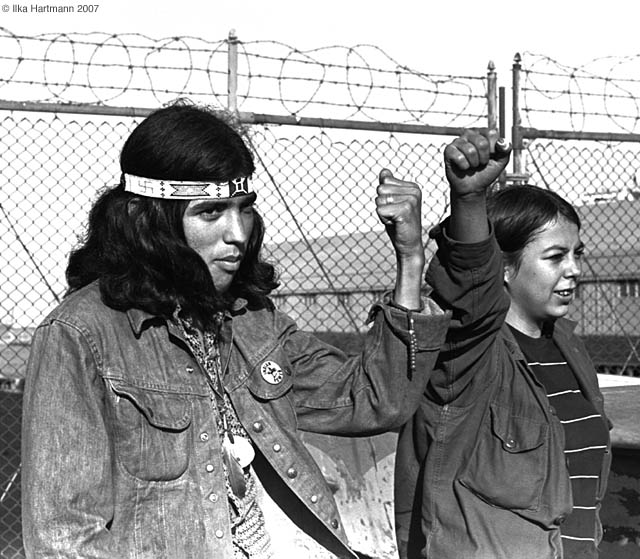
Although the Civil Rights era of the 1960’s is mostly associated with the progress of African-Americans, it was a time of activism across all minorities.  American Indians, who in their history had lost so much and suffered so much, were particularly inspired by the actions of Martin Luther King and began mobilizing as well.

This week in 1969 marked the beginning of an era of Indian activism when a group of 300 American Indians and non-Indian supporters took control of the abandoned prison on Alcatraz Island in San Francisco Bay.  The occupation ended up lasting for over a year and a half, and was successful in raising public awareness for their cause.

You may have noticed the usage of the term “American Indian” instead of the more familiar “Native American”.  Although both are considered acceptable, most people prefer to call themselves “Indians,” if not by their specific tribal name.

Remember, you don’t have to travel as far as an American Indian community to find diversity.  There are hundreds of opportunities to celebrate diversity right here at your own school.  Find one today! 

Saturday, November 6, 2010

Week 10: The Fall of the Berlin Wall

November 8, 2010:  Diversity is any kind of variety that makes our world a better place. 

Diversity is not always about “how we look.”  Even people from the same ethnic background who live right next to each other can experience both the joys and challenges of diversity.


Following defeat in World War II, Germany was split into two countries:  democratic West Germany and communist East Germany.  But 21 years ago this week, Communist control suddenly weakened, and exuberant residents of the divided city of Berlin were allowed to tear down the enormous wall that had been separating them from each other.  The Berlin Wall fell. 

Within one year, West and East Germany had re-unified into one country, Germany.  But even though West and East Germans are the same physically, the actual process of unifying as a people has been long and challenging, continuing even until today.  Their experience helps us to understand that in order to truly appreciate our diversity we need to value each other for who we are on the inside. 

Remember, you don’t have to travel as far as Berlin, Germany to find diversity.  There are hundreds of opportunities to celebrate diversity right here at your school.  Find one today! 

Saturday, October 30, 2010

Week 9: Dia de los Muertos

November 1, 2010:  Diversity is any kind of variety that makes our world a better place.  

One characteristic of American culture is that as a people we are always looking ahead.  This spirit keeps us moving forward and is a part of what foreigners admiringly refer to as “American optimism.”  On the other hand, how many ways can you think of in which we take the time to honor influences from our past, such as our family ancestors? 

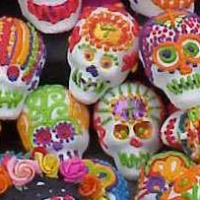
This week, people from Mexico and other Latin American countries will be celebrating Dia de los Muertos, or Day of the Dead.  This is a joyous holiday marked by parties and processions, where friends and family come together to pray for loved ones who have died.  People will visit family gravesites so that they can be cleaned and decorated.  Picnics often follow, sometimes well into the night.  Offerings of food, sugar skulls, and orange marigolds are traditional.  The day is a wonderful reminder to all of us to give thanks to those who came before us.  

Remember, you don’t have to travel as far as Mexico to find diversity.  There are hundreds of opportunities to celebrate diversity right here at your school.  Find one today!

Saturday, October 23, 2010

Week 8: the Statue of Liberty

October 25, 2010:  Diversity is any kind of variety that makes our world a better place. 

As students you will often be required to complete group projects.  On this week in 1886, the United States and France unveiled a group project that took over 10 years to complete:  the Statue of Liberty. 

We think of the Statue of Liberty as a gift from France—and indeed the statue was.  However, the United States was responsible for constructing the pedestal, or base.  This wasn’t as easy it sounds.  Initially planners tried to raise the needed funds from wealthy donors, but that didn’t work.  Then they lobbied Congress and the state of New York to pitch in, but they refused.  Work stopped.  It was only when a New York newspaper launched an all out fund raising campaign that appealed to the entire diversity of New Yorkers that enough funding was secured.  In fact, 80% of the money raised came from people who could only afford to donate one dollar or less.  

Remember, you don’t have to travel as far as Liberty Island to find diversity.  There are hundreds of opportunities to celebrate diversity right in your own school.  Find one today! 

Saturday, October 16, 2010

Week 7: the Guggenheim Museum

October 18, 2010:  Diversity is any kind of variety that makes our world a better place. 

What shape comes to mind when you think of a museum building?  One of the most famous museums in the United States is shaped like a cupcake.  This week we celebrate the opening of the Guggenheim Museum in New York City,  51 years ago.  

Many experts consider Frank Lloyd Wright the greatest American architect of all time, and the Guggenheim Museum is one of his most recognized works.  Dramatically casting aside the familiar system of floors and rooms, Wright designed the Guggenheim as a continuous, spiraling display space that moves up a circular building.  Though some critics complained at the time about its design, today the Guggenheim is considered a masterpiece.

Remember, you don’t have to travel as far as New York City to find diversity.  There are hundreds of opportunities to celebrate diversity right in your own school.  Find one today!